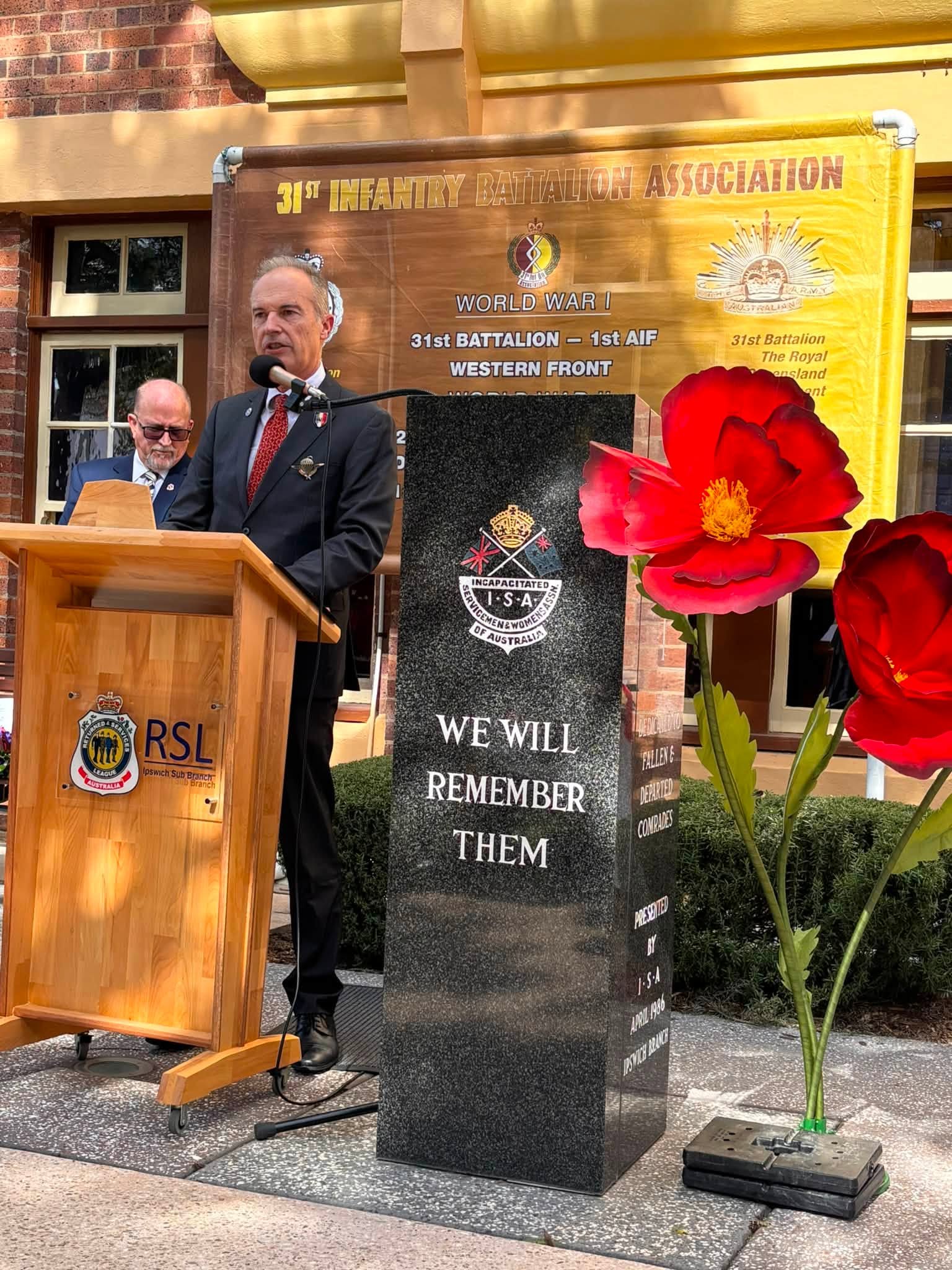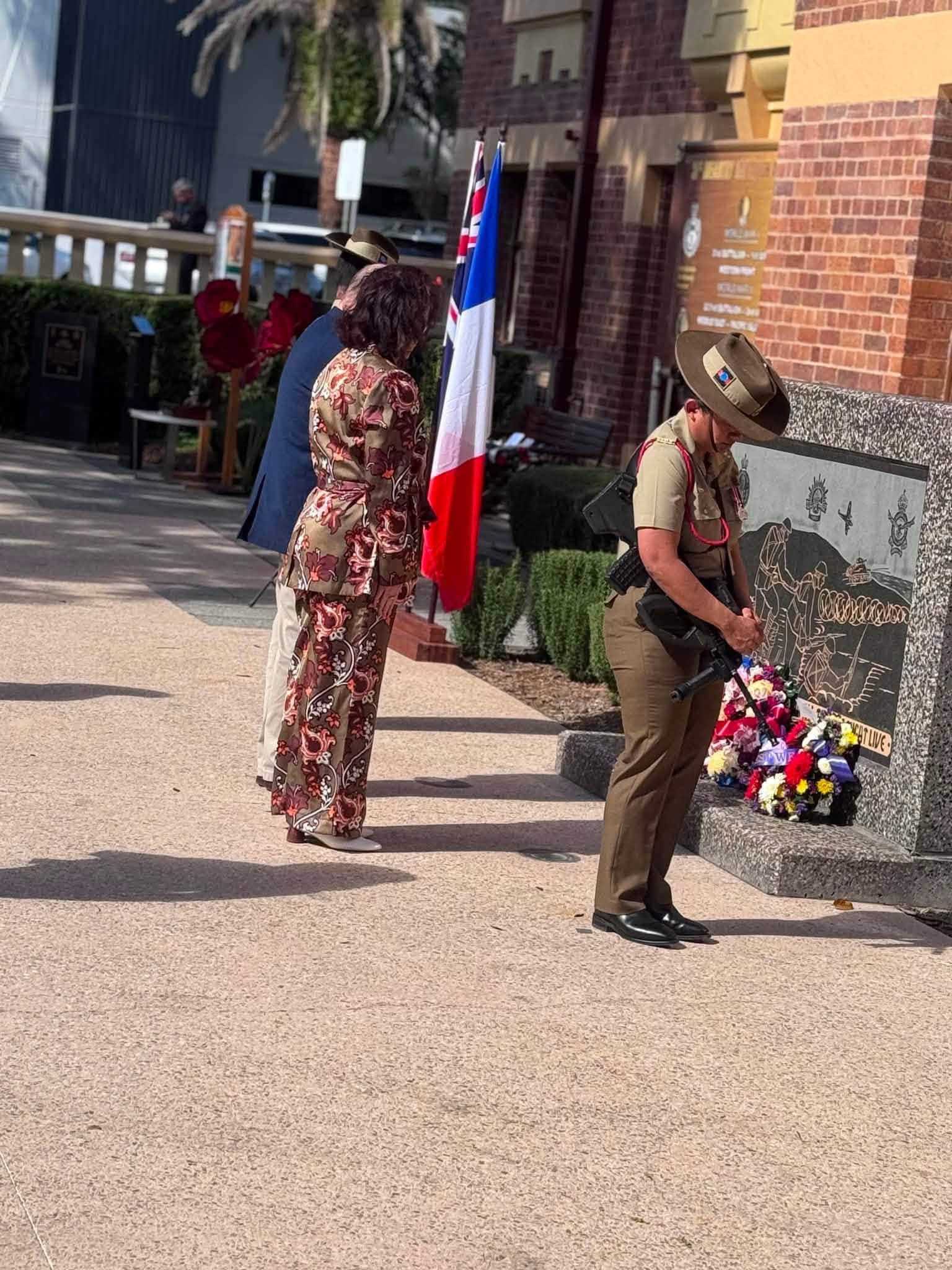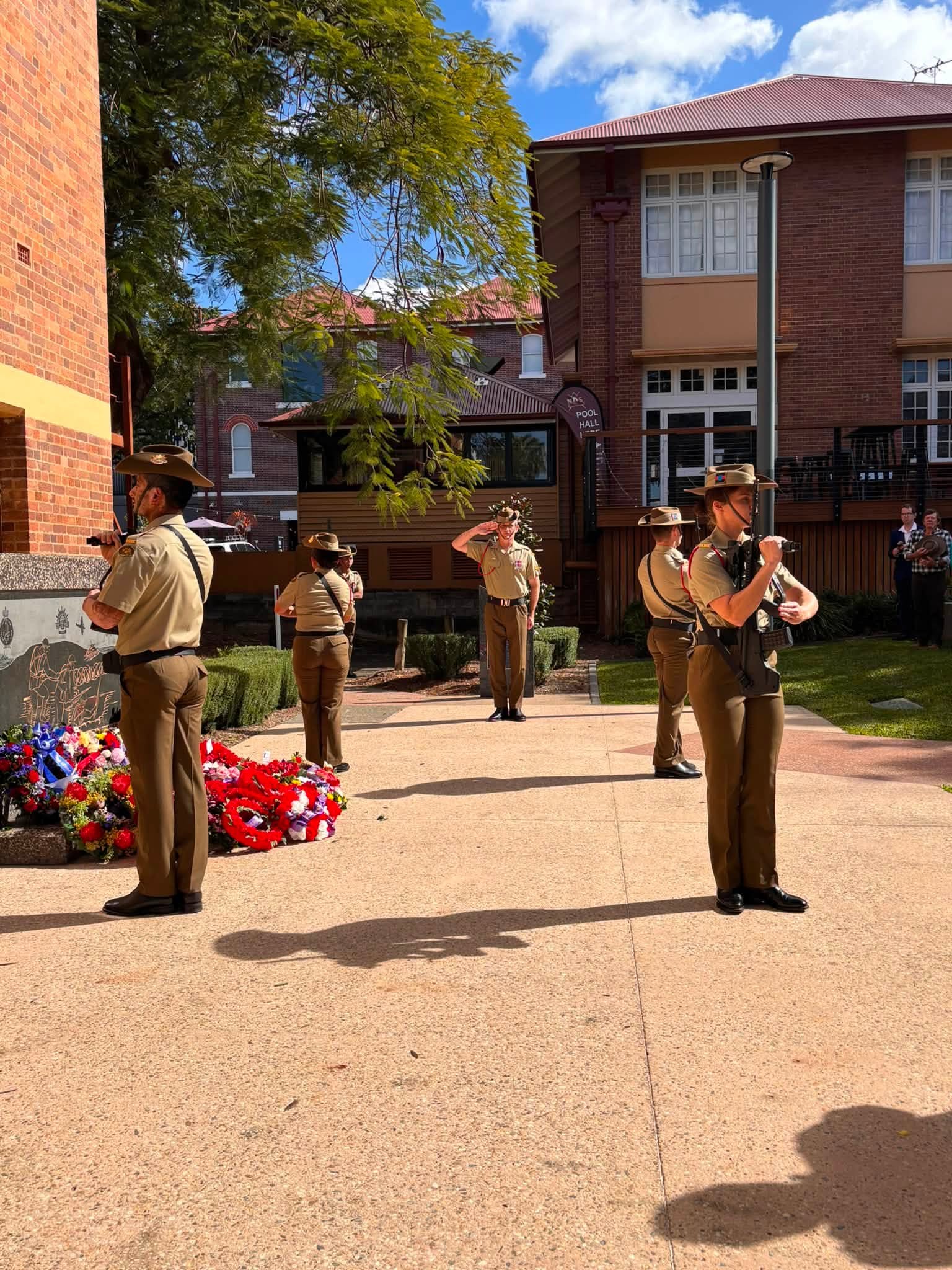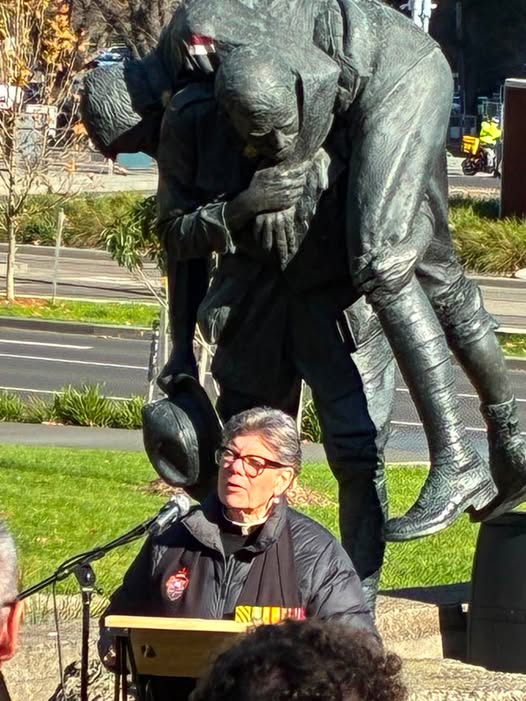
Honoured Guests, Dignitaries, Descendants, Service Members and RSL Members, joined with Members of the 31st Battalion Association for the Commemoration of the 110th Anniversary of the Battle of Fromelles on Sunday 19th July 2026 at 11.00 am at the RSL Soldier’s Memorial Hall, 63 Nicholas St Ipswich Qld. Another Service lead by Padre Katie Inch-Ogden also took place at he Cobbers Memorial adjacent to the Shrine of Remembrance in Melbourne. Later in our day a similar Service was held within sight of the 1916 Battlefield at Fromelles in Northern France.
–
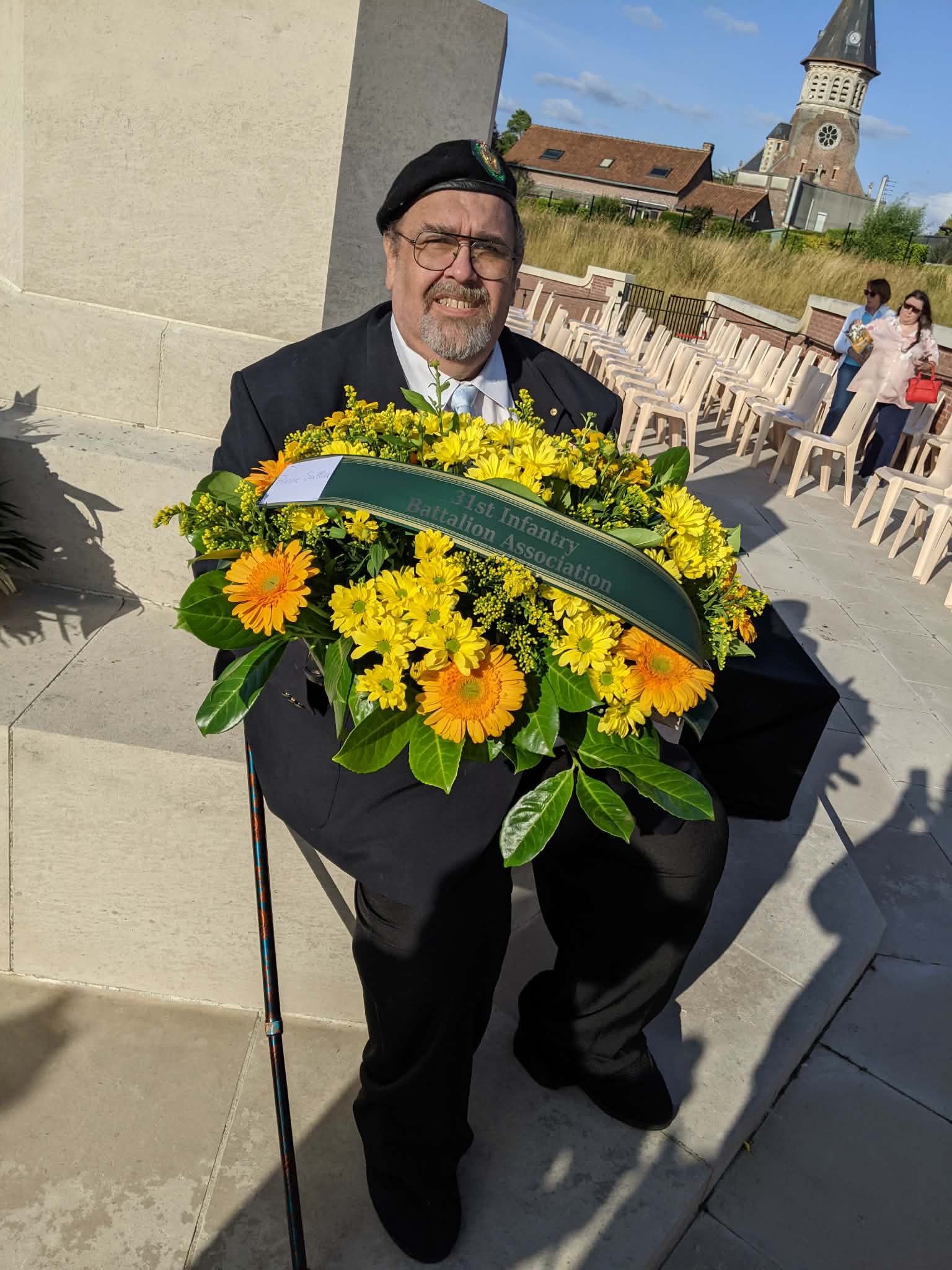
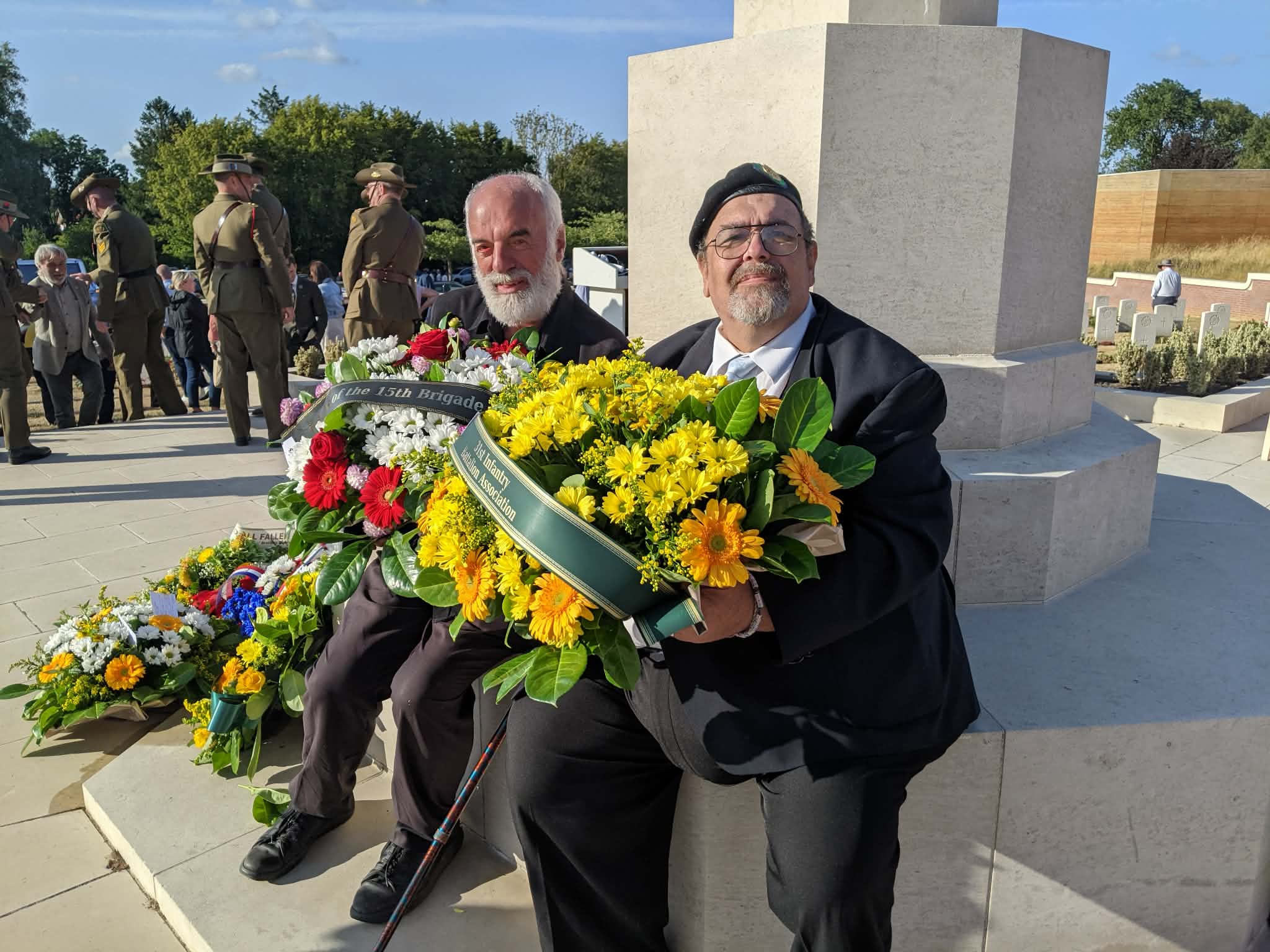
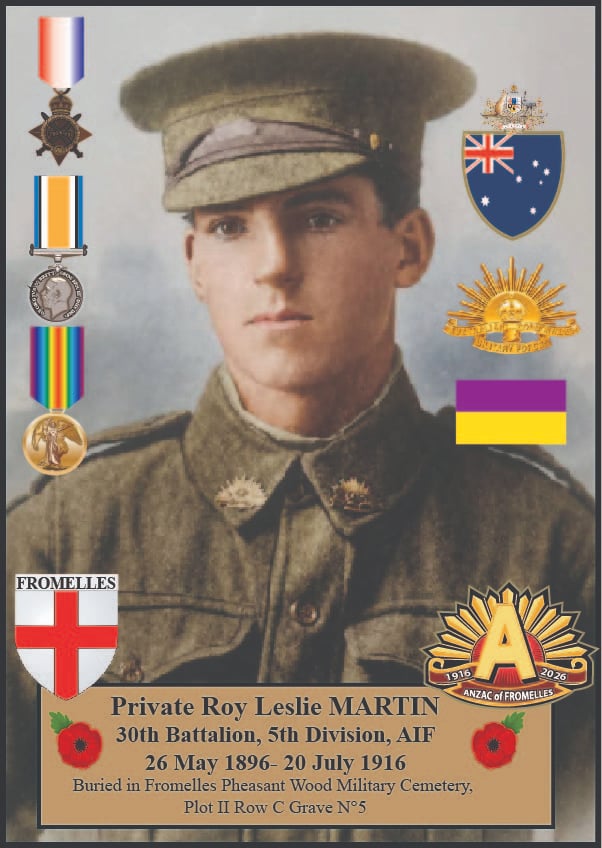
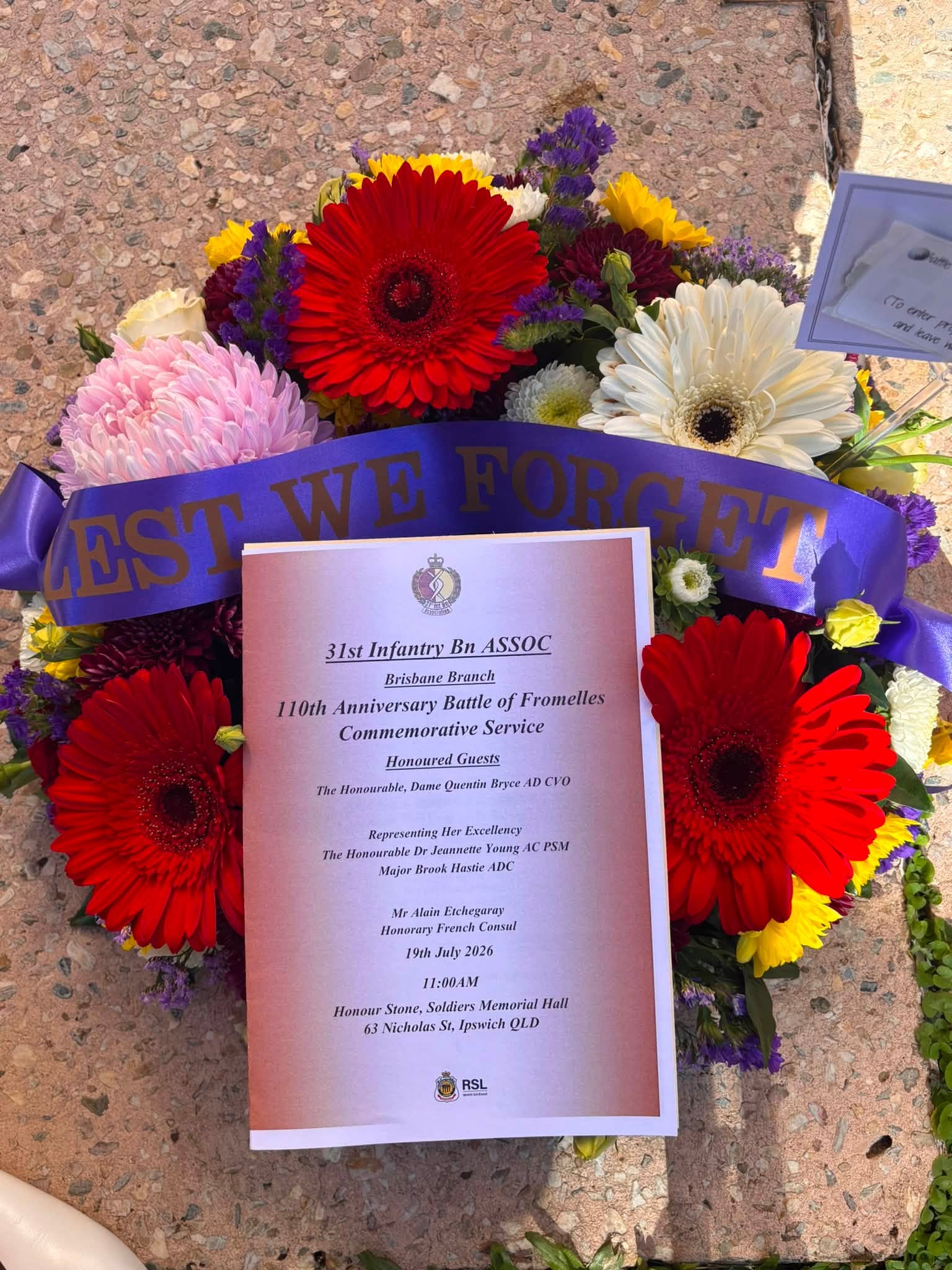
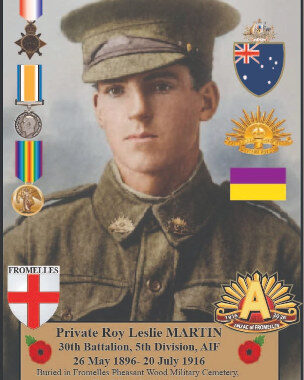
Life Member Pierre Seillier OAM laid a wreath at the Commemoration Service held in France. As Usual Pierre has teamed up with Lambis Englezos AM for the Day. Pictures below show the beautiful Wreath laid by Pierre on behalf of the 31st Battalion Assoc. Pierre, advises that more Photos will follow. One additional Body has been identified at Pheasant Wood Cemetery this year, – PTE Leslie Martin of the 30th Bn – 8th Brigade (Featured Image Above) whose nephew was at the Service in France this year. To date a total of 181 out of the 250 Bodies recovered have now been identified (For those unfamiliar with the story of Lambis Englezos and his amazing search for the missing 250 soldiers killed in the Battle of Fromelles type the name Lambis the search Box on this website.)
–
Honoured Guests for the Commemoration were:
The Honourable Dame Quentin Bryce AD CVO
Representing The Governor Of Queensland – Major Brook Hastie ADC
Honorary French Consul Mr. Alain Etchegaray
Representing the Ipswich Mayor – Councillor Marnie Doyle
–
MC for the Service Was Mr Paul Rogers President – Ipswich RSL Sub Branch
Catafalque Party – Members of 9th Force Support Battalion RAAF Base Amberley
Welcome Address – COL Mark Plath (Rtd)
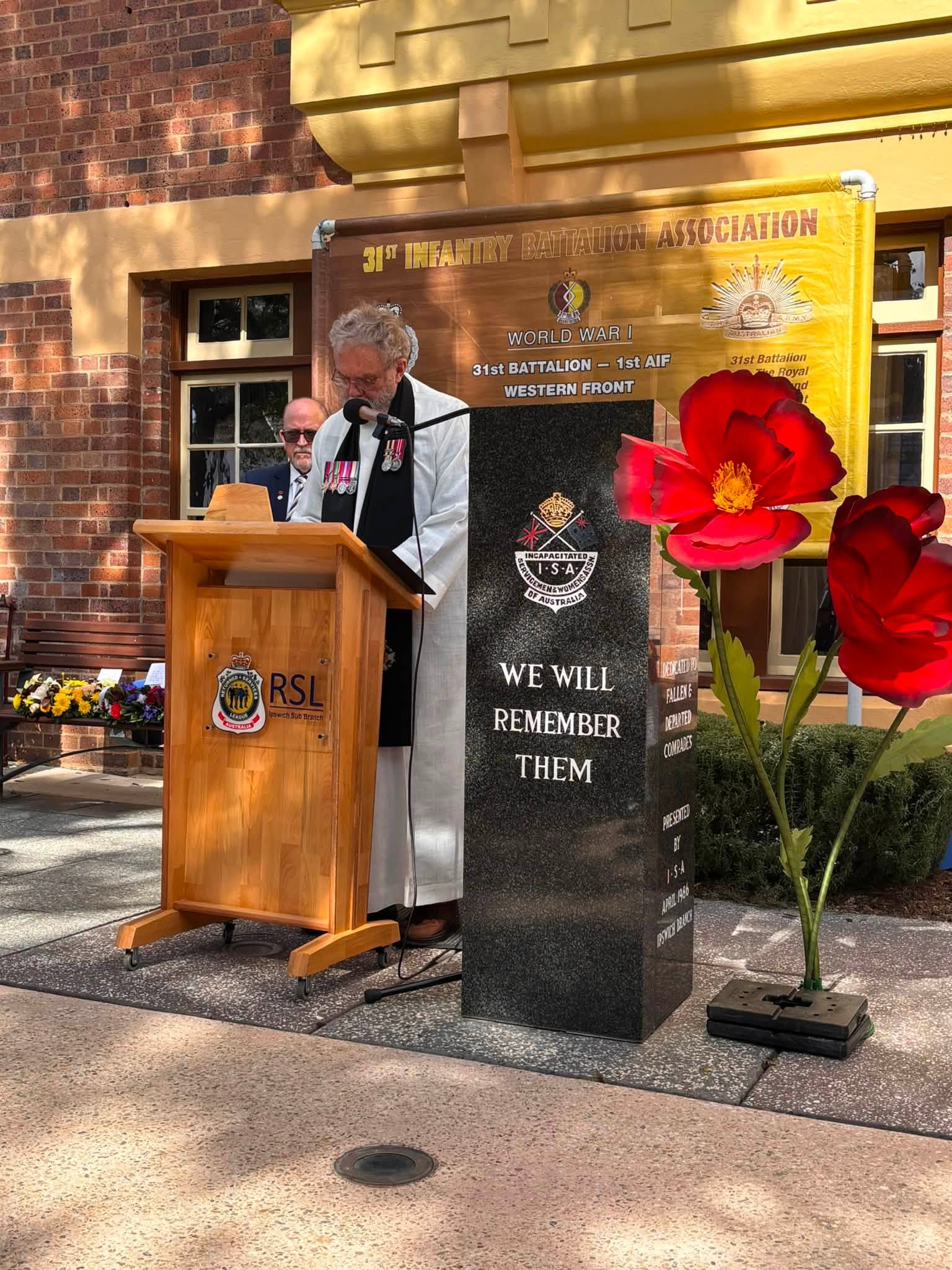
Service Padre – Rev Dr Peter Woodward
Guest Speakers:
Honorary French Consul – Mr Alain Etchegaray
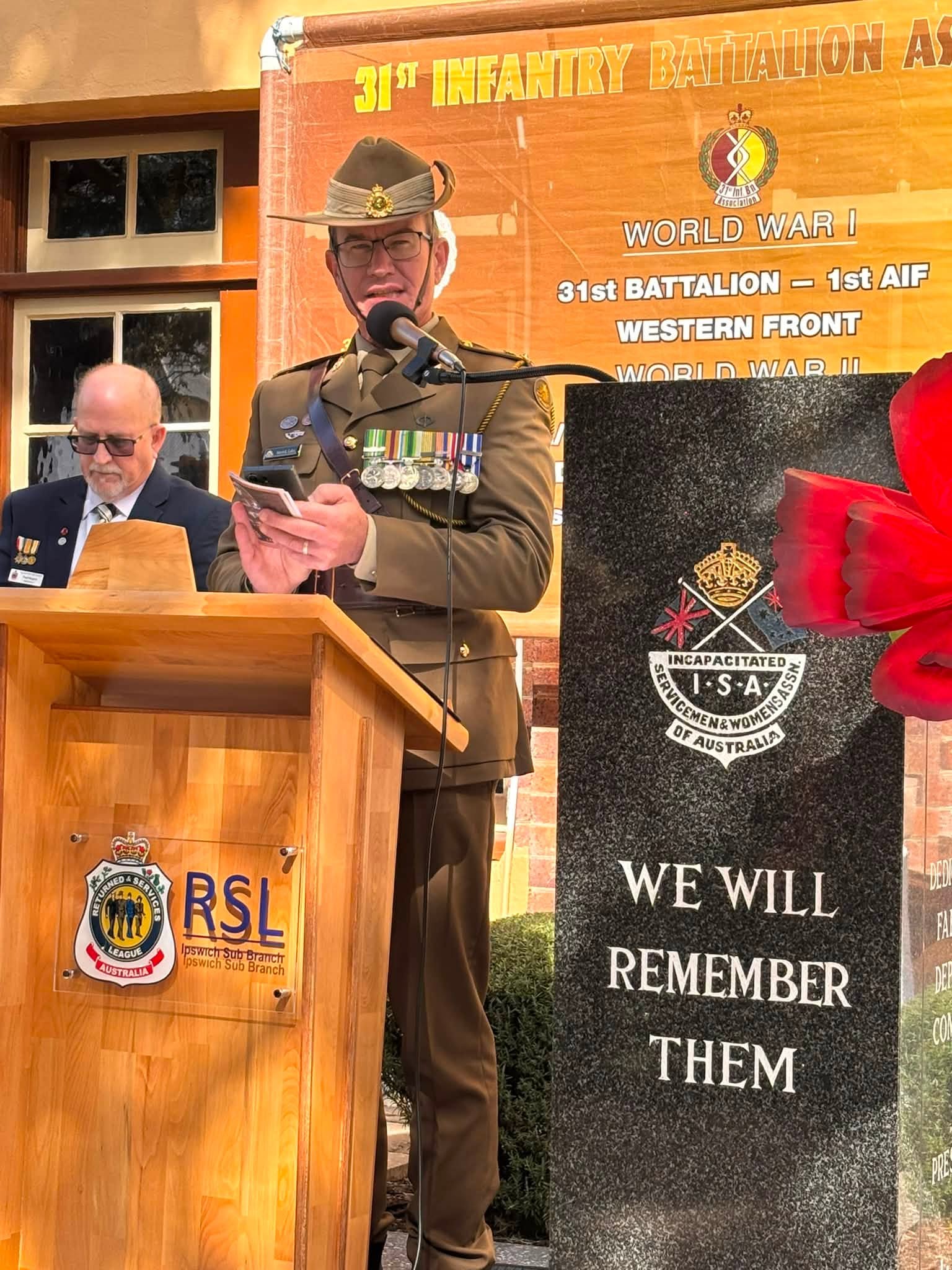
Delivering the Fromelles Address – BRIG Chris Hamilton (Rtd) See Address Below
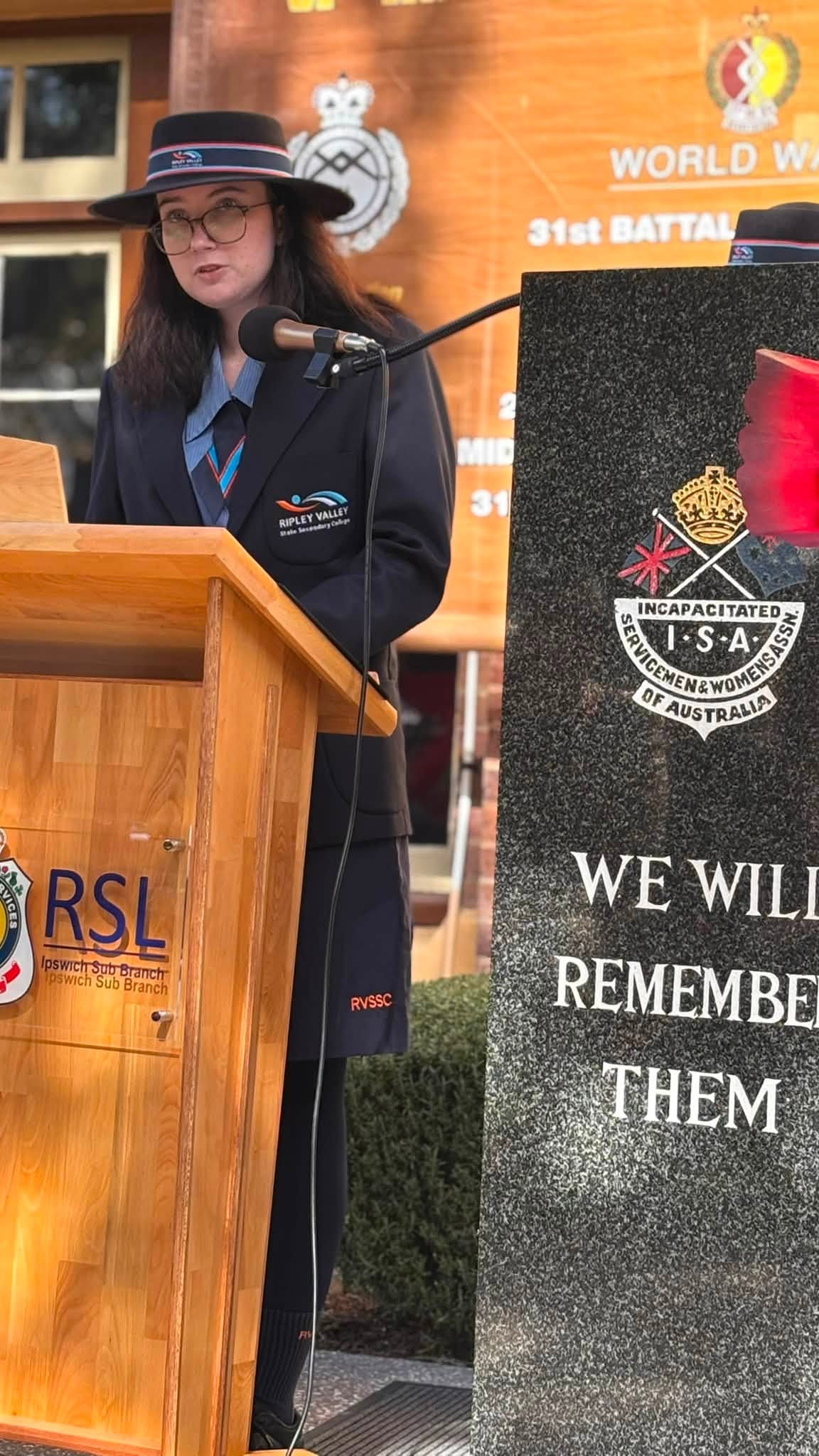
Delivering Address on Featured Soldier – Jayla Cameron – Ripley Valley Secondary College Student
–
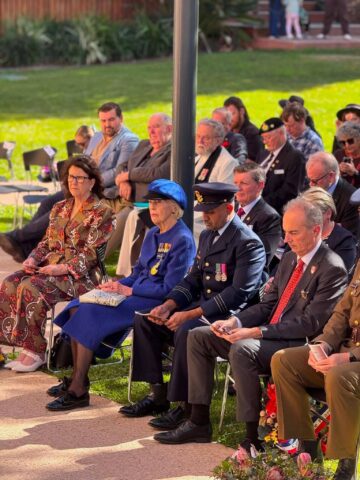
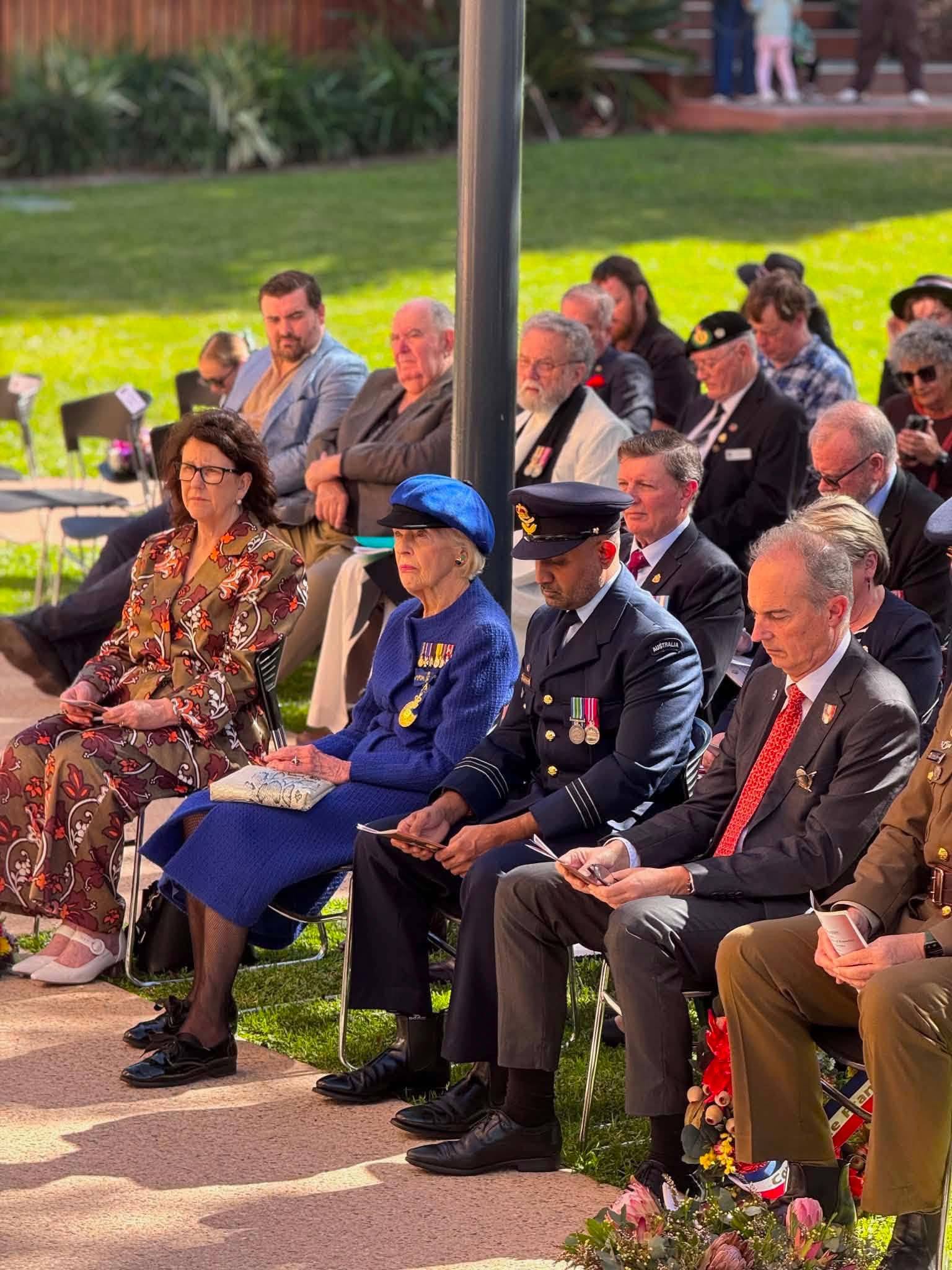
Part of the Assembled Gathering at the Fromelles Commemoration
The Ceremony opened with a song Commemorating the Bravery of the
31st Battalion at Fromelles
–
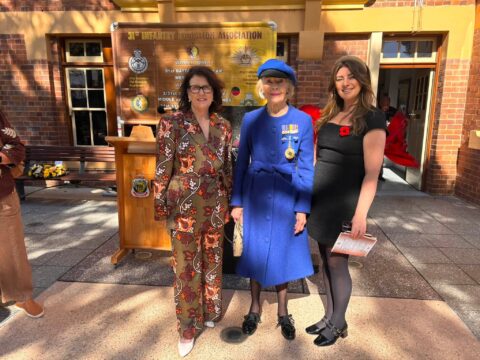
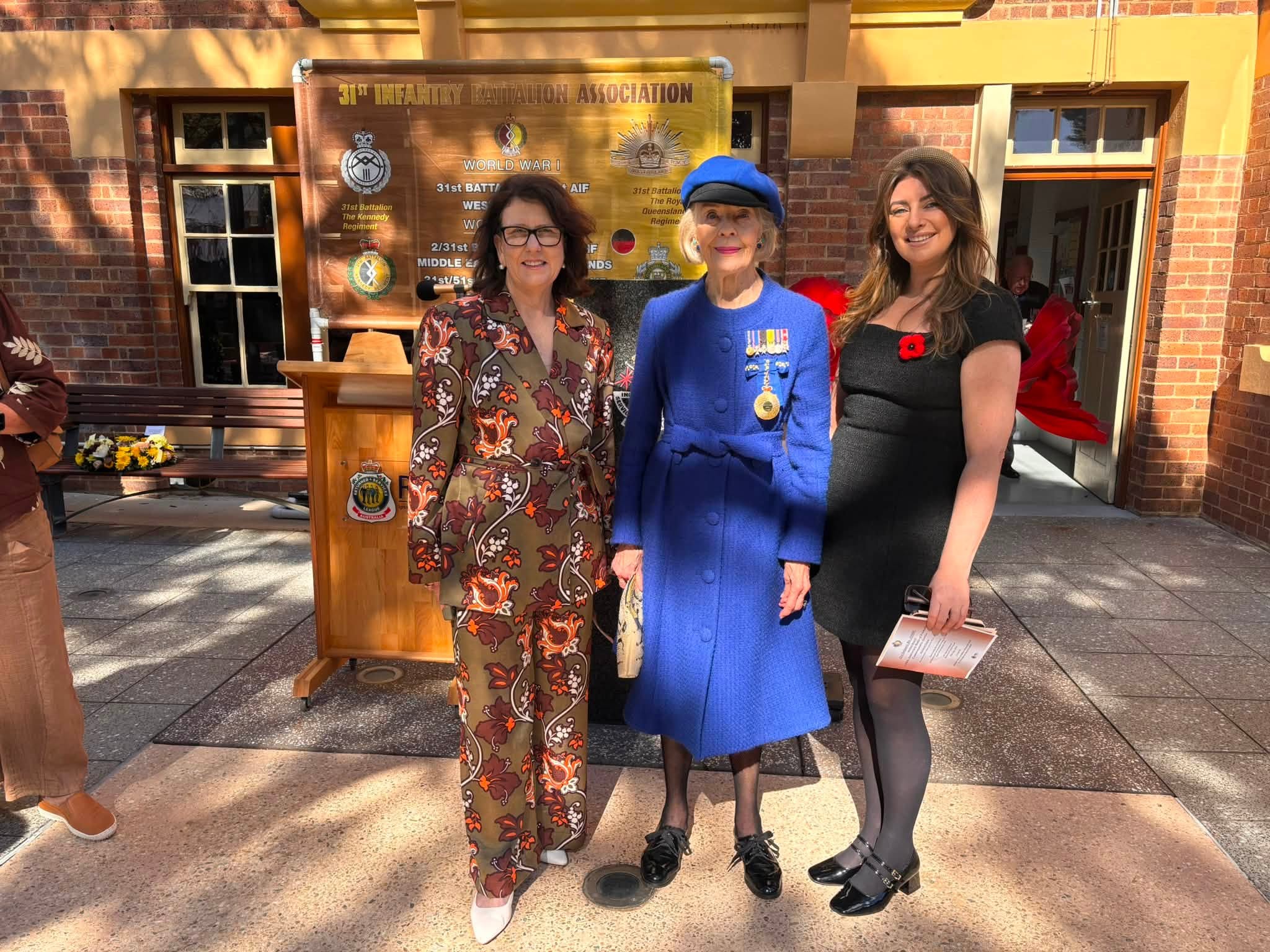
Honoured Guest Dame Quentin Bryce AD CVO With
Councillor Marnie Doyle (left) Representong Mayor of Ipswich and
Representitive of Member for Ipswich Jennifer Howard MP (right)
–
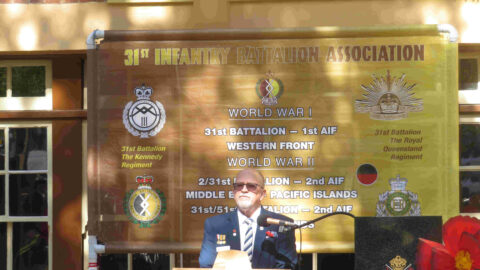
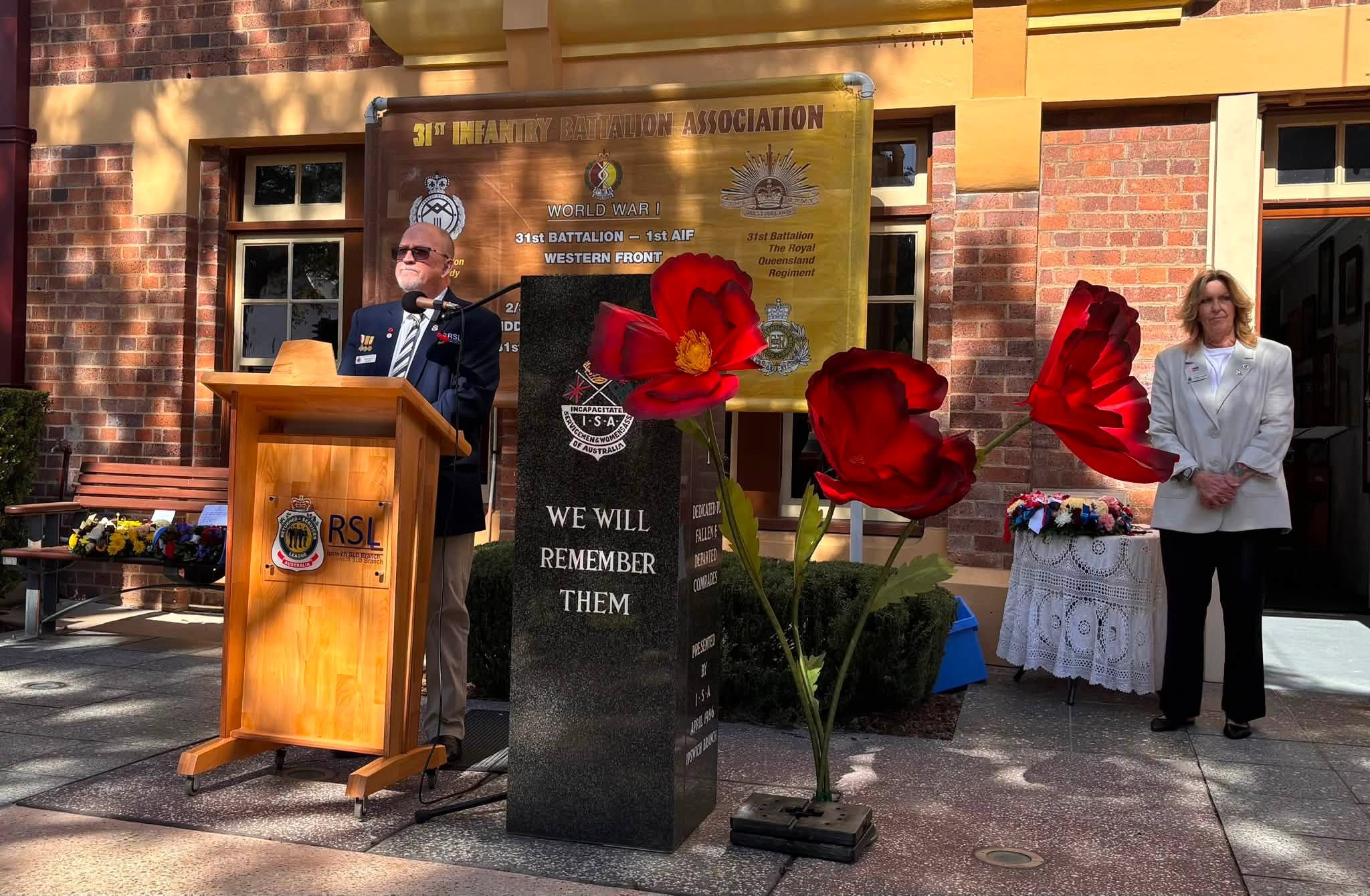
MC Mr Paul Rogers – President Ipswich RSL Sub Branch
–
Featured this year Captain Francis Ryan Smith MC DFC who fought in the Battle of Fromelles. His life story was wonderfully delivered by Ripley Valley Secondary College Student – Jayla Cameron. The story of this remarkable member of our 31st Battalion was told in an article on this website, posted in April of 2022, researched by Association Member Peter Nelson and presented by Association Brisbane Branch Secretary Mick James.
–
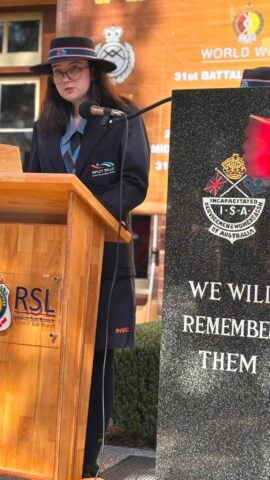
Jayla Cameron Delivering Address on Capt Frank Smith MC DFC
–
The importance of the Fromelles commemoration was highlighted by the fact that the CO – LTCOL Merrick Lalor and RSM – WO1 Glenn Herbert of 31/42 Bn RQR flew down direct from field exercise “Austral Shield” to attend. Immediately after the Commemoration they both returned north to the field exercise. A fortuitous offshoot of this was that the Army Museum North Queensland granted permission to allow the 31st Battalion WW1 – Cornet to accompany the RSM down to Brisbane to be on Display at the Commemoration Service. The story of the old Cornet and its restoration – The Heart and Soul of the Brown and Gold – was recently featured on this website.
–
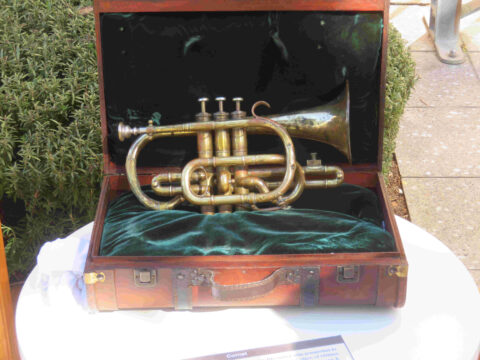
WW1 31st Battalion Cornet now Restored and Held in The Army Museum North Qld
–
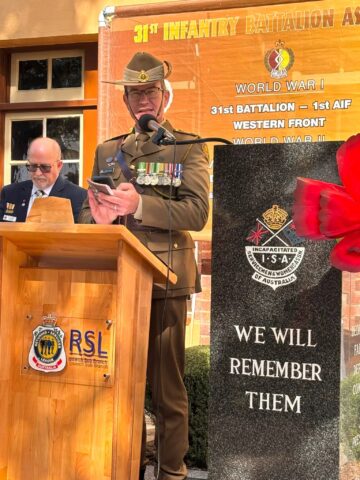
LTCOL Merrick Lalor Providing Briefing on Current 31/42 Bn Activities
Brief Comment by Tony Wadeson – President of the 31st Bn Assoc (Brisbane Branch):
Our Ipswich Service, despite the numbers being down on last year, went very well, and can be seen on Facebook. – “Ipswich RSL Sub-Branch” live feed. – Just Listen to the Opening Song, written & sung by an Ipswich RSL Sub-Branch member about The Ipswich Boys – the 31st Battalion, and Fromelles. The names he mentions are Ipswich boys who fought in the Battle & who’s descendants were sitting in the audience, – Just Brilliant. – Its hit Parade Material. The address on the Battle, by former CO of 31st Bn, BRIG Chris Hamilton (Retd) was fantastic. It is reproduced below.
–
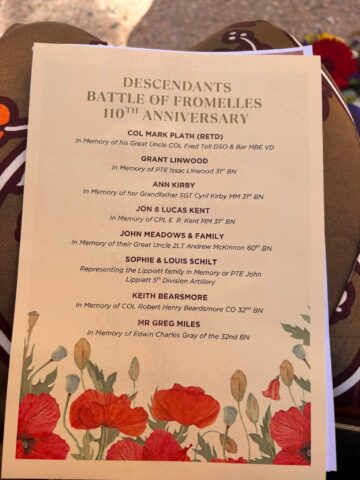
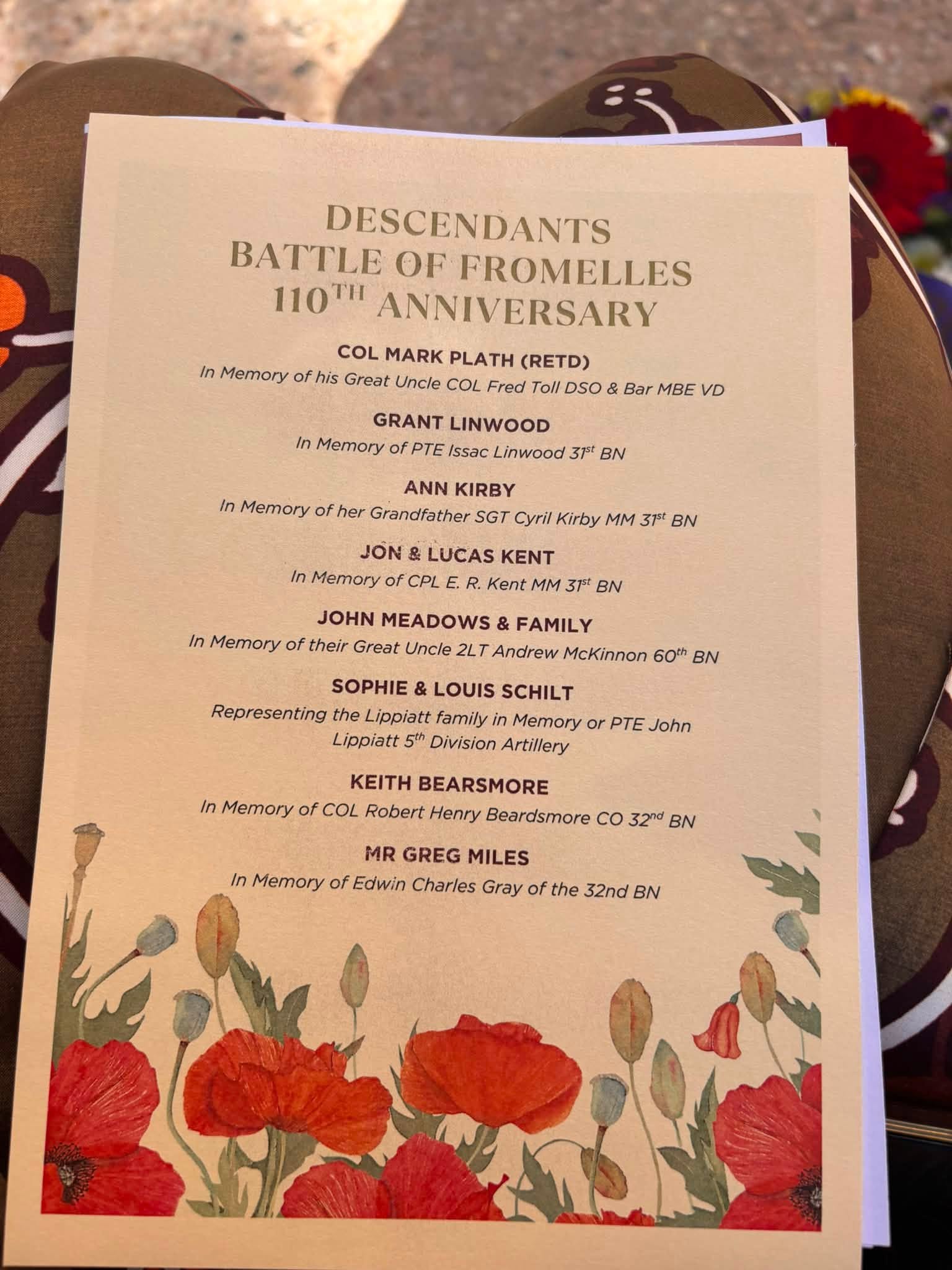
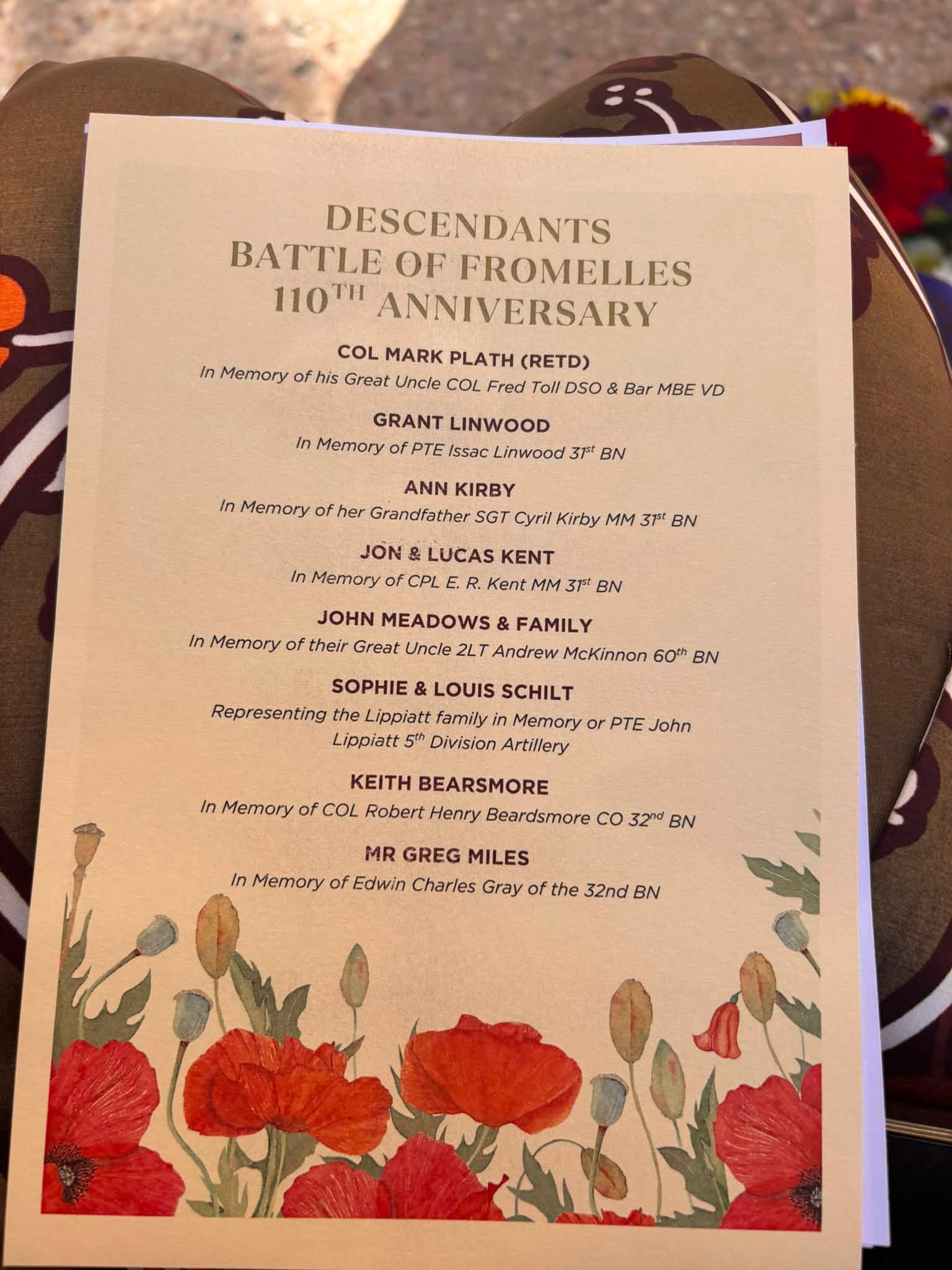
List of Descendents Present at Service
–
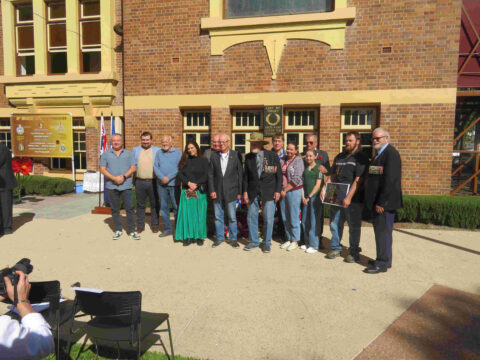
Descendents Of WW1 Diggers who fought at The Battle of Fromelles
At the RH End is COL Mark Plath (Rtd) who is a Descendent of
LTCOL Frederick Toll MBE DSO & Bar VD – CO of 31st Bn
–
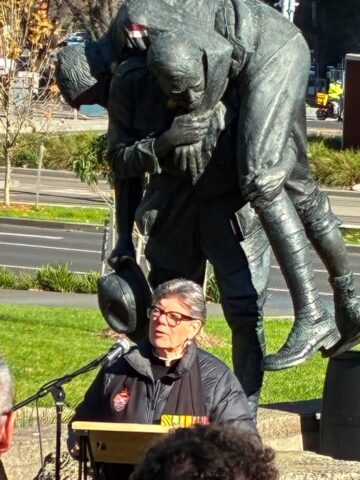
Commemoration At the Cobbers Memorial in Melbourne
by Padre Katie Inch-Ogden
–
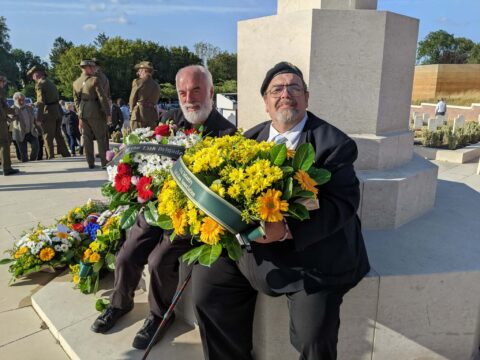
Commemoration at Fromelles, France – Lambis Englezos AM (Left) with Pierre Seillier OAM (Right)
–
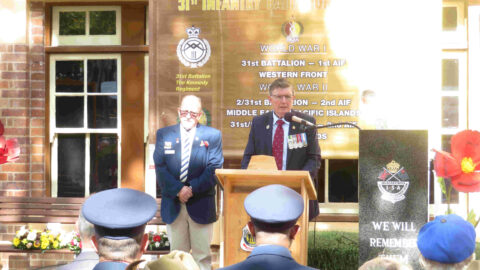
Brigadier Chris Hamilton (Rtd) Delivering Battle of Fromelles Address
(Text Below)
–
–
THE BATTLE OF FROMELLES
110TH ANNIVERSARY ADDRESS
When Did the Battle of Fromelles End?
Ladies and gentlemen,
I begin with a simple question. When did the Battle of Fromelles end?
Most military historians would answer without hesitation. They would say that the battle ended on the morning of 20 July 1916, barely twenty-four hours after it began.
The attack had failed; the survivors withdrew and the German line remained intact.
The Battle of Fromelles was over. Casualty returns were compiled. The armies moved on. History appeared to do the same.
Is that the right answer? I do not believe so.
While the fighting may have ended, its consequences did not. For the men who fought there and the families waiting anxiously at home, Fromelles continued long after the armies moved on. For some families, it continues even today.
[ACKNOWLEDGEMENTS]
Now, back to the question.
I want to put a proposition to you. Australia lost Fromelles twice.
The first loss was immediate and human: the dead, the wounded and the damage carried into families, communities and the life of a young nation.
The second loss unfolded more slowly. The meaning of what had happened became obscured, and Australia failed, for far too long, to give Fromelles its proper place in our history.
The first loss cannot be recovered. The second can.
At services such as this, the keynote speaker usually recounts the battle and remembers some of the men who fought it. That is important work and, over many years, it has been done well.
Today, I want to do something different. I do not propose to retell the battle—not because it is unimportant, but because this address is about what followed.
For today, three facts are enough. The battle lasted less than twenty-four hours. The 5th Australian Division suffered 5,533 casualties, including almost 2,000 men killed in action or dying of wounds. No lasting tactical advantage was gained.
By every military measure, Fromelles was a defeat.
Military historians will continue to examine the decisions that produced that defeat. They should. Every profession has an obligation to learn from its failures, and the profession of arms is no different.
A commemorative service asks a different question: what did that failure mean for the men who fought, the families who waited for them and the nation they served?
Statistics might help us understand scale, but they cannot explain the reach of a battle’s consequences. The figure of 5,533 casualties has been repeated so often that it risks becoming familiar, and familiarity can dull even the sharpest truth.
Statistics record the casualties. Families remember the names.
Many men never returned from France. Others returned carrying terrible physical wounds or wounds of the mind that medicine neither understood nor knew how to treat. They came home, but they did not always return to the lives they had left behind.
For countless families, the war did not end when a husband, son or father stepped off the troopship. It merely changed its form. Parents cared for sons who could no longer work. Wives became lifelong carers as well as breadwinners. Children grew up in homes shaped by pain, disability, nightmares, anger, withdrawal or silence.
For some veterans, the burden became unbearable. They later died by their own hand because they could not reconcile themselves to what they had experienced and because the help they needed simply did not exist.
So the loss at Fromelles was far greater than the number of men killed on the battlefield. In one night, Australia lost lives, health, opportunity and generations of human potential. Its consequences reached through families and communities for decades.
That was the first loss.
The soldiers’ families knew that something dreadful had happened. Telegrams arrived. Casualty lists appeared in the newspapers. Their grief was immediate and unmistakable. The losses themselves could not be hidden.
The nation, however, was given a very different picture.
Wartime censorship restricted reporting. Official communiqués spoke of raids, prisoners taken and troops returning to their own lines. They revealed little about the scale of the losses or the failure of the operation. Australians were left to wonder whether Fromelles had been a success, a failure or something in between.
Then the nation’s attention moved elsewhere.
Within days, Australian began receiving news about the battle at Pozières; Gallipoli had already become the defining story of the AIF. Fromelles, a failed subsidiary operation away from the main Somme battlefield, receded from national memory.
Yet for Australia, 5,533 casualties from a single division in less than twenty-four hours amounted to a national catastrophe. It deserved then, and still deserves now, a far more prominent place in our history.
The families never forgot. Australia largely did.
That was the second loss.
For some Australians, that second loss was measured in history. For hundreds of families, it was measured in uncertainty.
That uncertainty was captured in a single word appearing in official records, Red Cross files and letters home.
Missing.
We tend to think of “missing” as a military classification, perhaps later qualified as believed killed or prisoner of war. For families, it meant something far more cruel: uncertainty without end.
A telegram might say that a son was neither confirmed dead nor known to be alive. How long could a family keep hoping? Every report of prisoners might revive the possibility that he would return. To mourn could feel like abandoning him; not to mourn meant living indefinitely between hope and grief.
For many there was no body, no funeral and no named grave. Parents died without knowing where their son lay. Children and grandchildren inherited questions instead of answers. Hope remained, but so did the inability to mourn with certainty.
That is what missing meant.
That is why we must be precise when speaking about later discoveries at Fromelles. Recovering remains does not create new casualties. Those men were already counted among the dead or missing. What changes is our knowledge: a man once listed as missing or presumed killed is identified, his grave is named and certainty is restored to his family.
The number does not become larger. Our knowledge becomes deeper.
For most of the twentieth century, it seemed that the missing of Fromelles would remain so. Then Lambis Englezos, a Melbourne schoolteacher, challenged the accepted account. His persistence, supported by researchers, families and governments, led to investigation at Pheasant Wood.
There, in five burial pits, lay 250 Australian and British soldiers.
Their discovery was possible because German soldiers had recovered the Allied dead, buried them at Pheasant Wood and recorded the burials. They could not have known that those records would one day help return men to families on the other side of the world.
Only hours earlier, the two sides had been trying to kill one another. Once the fighting passed, soldiers recognised soldiers. Professional respect had outlived the battle.
Without those burials and records, the 250 might have remained missing forever.
In 2010, they were reburied individually with full military honours at the Fromelles (Pheasant Wood) Military Cemetery. As of this anniversary, 181 have been identified; 69 remain unnamed. Twenty-three of those identified served in the 31st Battalion.
The most recent identification from the 31st Battalion was Private William Christopher Brumby of C Company, announced in 2024. Brumby was twenty-nine when he was killed. For more than a century, his name was known but his grave was not.
For Brumby’s family, as for the families of the other identified men, what changed was not the fact of death. That was already known. What they received was a place. A named grave. Somewhere descendants could stand and say with certainty: this is where he rests.
Every identification returns a soldier to his name.
It also returns him to his family, his battalion and his rightful place in history.
But the work is not finished.
Somewhere, there may still be a family whose DNA, family tree, photograph or old letter could identify another of the 69 unnamed men. Finding those families is not merely an exercise in history. It continues the work begun when the first burial party entered the field in July 1916.
That brings me to my own experience of Fromelles.
In August last year, I visited the battlefields of the Western Front for the first time. I had read about them since I was young and studied them throughout my military career. I had taught that history to young officers at the Australian and Canadian Staff Colleges. I understood the campaigns, the orders of battle and the lessons we, as military professionals, drew from them. But knowledge gained from maps, books and staff rides is not the same as standing on the ground.
Over several days I visited the places whose names are woven into Australia’s military history. Pozières, The Windmill, Mouquet Farm, Bullecourt, Messines and Villers-Bretonneux. Each gave physical meaning to events I had known intellectually for decades. The cemeteries that dot the landscape change war from the abstract to the personal. Casualty figures become individuals. A name. A religion or belief. An age. A regiment. A date.
Then I came to Fromelles.
I expected it to be moving. I was not prepared for the effect it had on me.
Part of it was the knowledge that this quiet, cultivated ground had been the scene of Australia’s worst twenty-four hours. Part of it was the contrast between the peaceful village and the violence that once consumed it. Another part was knowing how long the dead and missing had waited for the truth of their fate to be established.
But there was another reason.
During my time in service, I had the great privilege of commanding the 31st Battalion, The Royal Queensland Regiment. In my view, there is no greater privilege in the Australian Army than commanding soldiers. A commanding officer does not own a battalion. They are entrusted with it, and with the care of its soldiers, for a short period. They become one custodian in a line that began long before them and will continue long afterwards. The CO inherits the battalion’s traditions, honours, reputation and people. They also inherit an obligation to those who wore its badge and colour patch in earlier generations.
As I walked among the graves at Fromelles, I stopped longer at the headstones of men from the 31st Battalion. I read their names and ages and thought about the short distance between where they now lay and the ground over which they had advanced.
I also thought about the lives those men did not have the opportunity to live: the work they might have done, the families they might have raised and the contribution they might have made to Australia.
I thought of the families in Queensland and Victoria who waited for letters that never came or received telegrams that changed their lives, and those who never had the opportunity to visit the place where their loved ones now lay.
A battlefield death ends one life, but it can also erase generations of possibility.
I remembered Brigadier Harold ‘Pompey’ Elliott and the words associated with his grief after Fromelles: ‘My poor bloody boys.’ I had understood those words for years as a soldier, as a student of military history and as a commander. Or I thought I had. At Fromelles, standing among the men of the 31st Battalion and their comrades, I understood those words in a different way.
Although those men wore a different uniform from mine, served under a different Sovereign and fought in a different war, the years that separated us and our service became irrelevant.
They remained soldiers of the battalion I had once been privileged to command. These were my soldiers. My poor bloody boys.
I am not afraid to admit that on that day I wept…openly and often.
That experience brings me back to the question with which I began.
When did the Battle of Fromelles end?
As a military operation, the answer is straightforward. It ended on 20 July 1916.
But its consequences endured in grieving families, damaged lives, unanswered questions and in a nation that took far too long to understand fully what had happened.
Over the past century, parts of that unfinished story have been resolved. The battle became better understood. The graves at Pheasant Wood were located. The dead were recovered and buried individually. One hundred and eighty-one have been returned to their names. Families have received answers that their forebears died without knowing.
Yet the story is not complete. Sixty-nine men at Pheasant Wood remain unnamed. Other Australians killed at Fromelles still have no known grave. Many descendants remain unaware of their connection to the battle. And Fromelles itself still does not occupy the place in Australia’s national memory that its scale, consequences and lessons demand.
So, where does that leave us?
We cannot undo the decisions of 1916, restore the lives lost or repair the damage carried home. But we can tell the truth, continue the search for the unnamed and ensure that the men of Fromelles are never reduced to a number repeated once each year.
Families and descendants preserve the photographs, letters and stories that may yet identify another soldier.
Organisations like the 31st Battalion Association carries forward the history and traditions of a battalion that paid an extraordinary price on its first major battlefield.
The Australian Army has a different responsibility. It honours the men of 1916 by knowing their story, learning from the failures that placed them there and ensuring that the battalion carrying their heritage remains worthy of it.
The nation’s responsibility is broader still. The 19th of July deserves a place among Australia’s great commemorative dates, not because Fromelles was a victory, but because remembrance is not reserved for victories. Gallipoli, Pozières, Villers-Bretonneux and Long Tan hold that place in our national consciousness.
So should Fromelles..
While our responsibilities may differ, our duty is shared.
The men of the 31st Battalion did their duty on 19 July 1916. It now falls to us to do our part.
Not to fight their battle again, but to tell the truth about it. Not merely to repeat the number 5,533, but to remember the names within it. Not to assume the work is finished while there is still someone to be found.
As long as another soldier can be identified, another family found, another story recovered and another generation taught, the work of remembrance continues.
Fromelles reminds us that remembrance is not simply looking back.
It is bringing the missing home, one name at a time, and carrying their story forward.
These were our soldiers. They still are.
Lest We Forget.
–
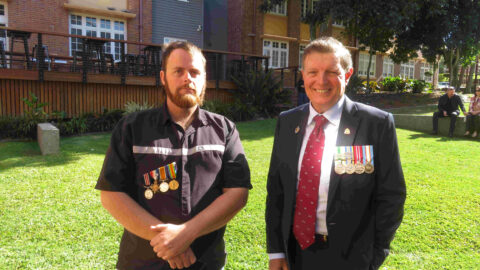
BRIG Chris Hamilton (Rtd) speaking to Sean Kirby Descendant of Sgt Cyril Kirby MM
who fought at Fromelles. Sgt Kirby MM survived WW1 to return home.
–
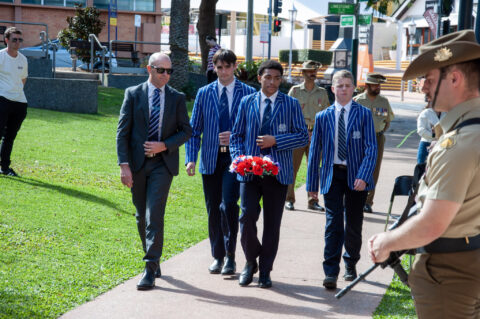
Students of Nudgee College with Principal Laying Wreath
(Pictire Courtesy Simon Brooks RSL QLD)
–
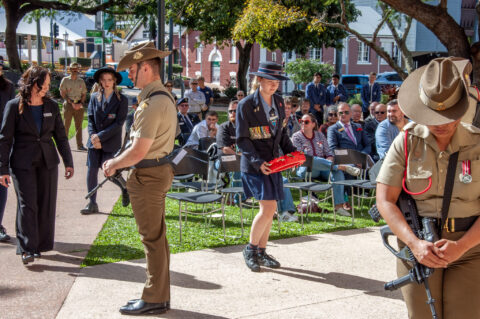
Student Ripley Valley Secondary College with Defence Mentor Laying Wreath
(Picture Courtesy Simon Brooks RSL QLD)
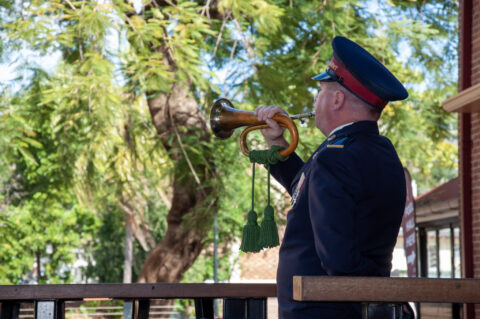
Salvation Army Bugler Playing Last Post and Rouse
(Pictue Courtesy Simon Brooks RSL QLD)
–
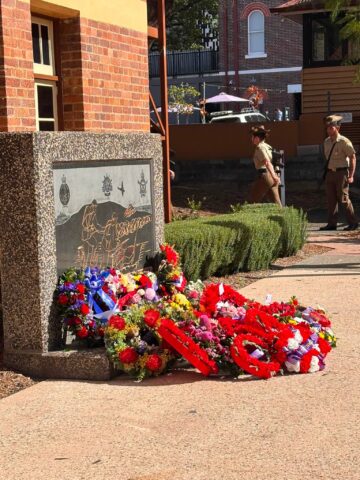
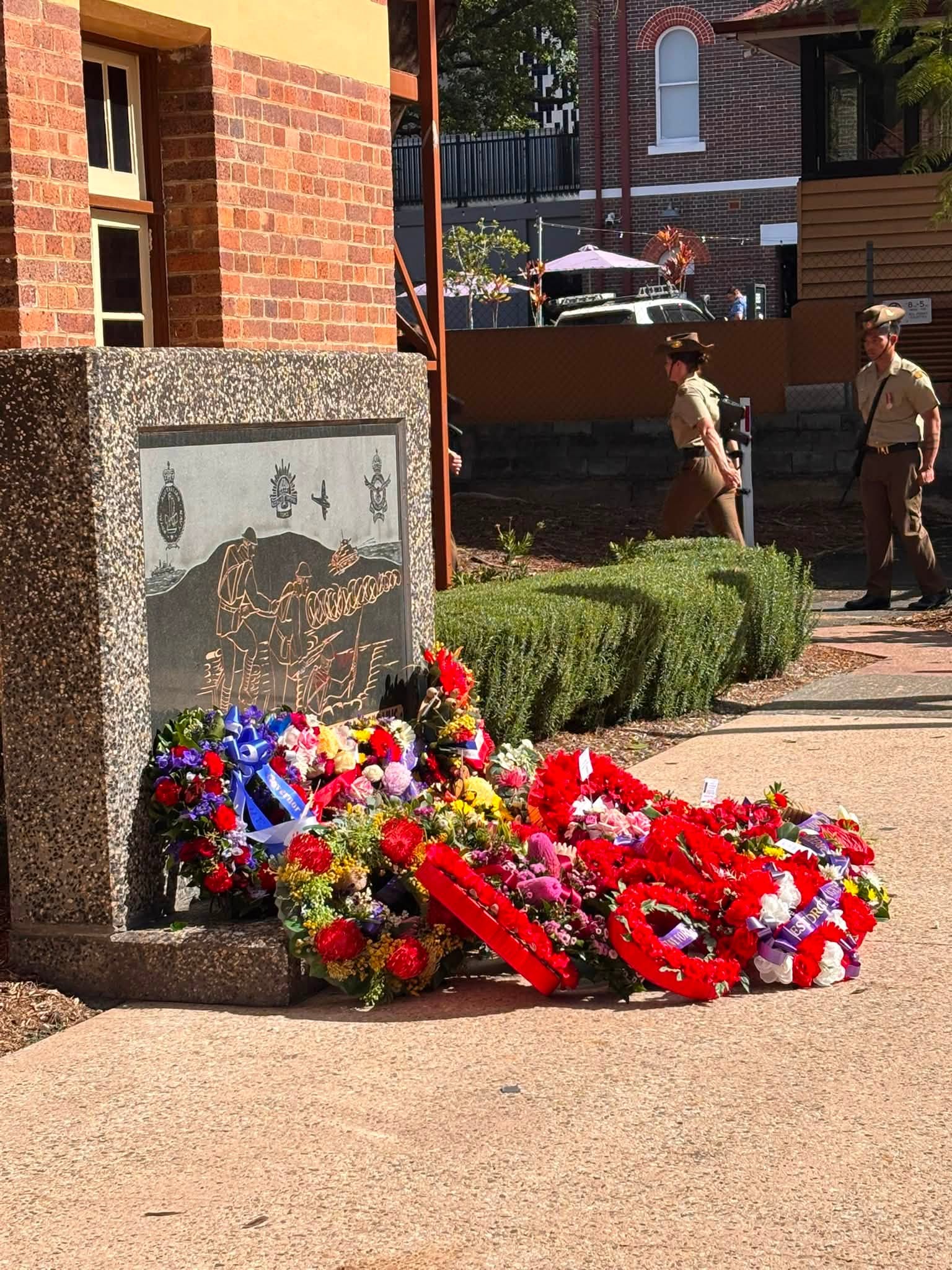
Honour Stone At Completion of Laying of Wreaths
–
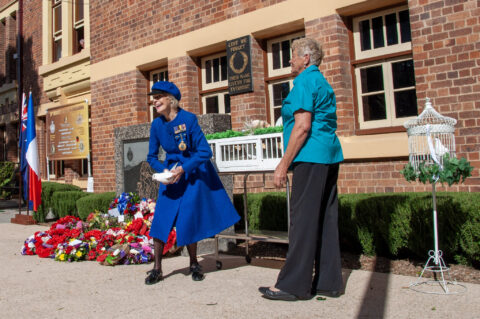
Dame Quentin Bryce AD CVO Releasing the First of the Peace Doves
(Picture Courtesy Simon Brooks RSL QLD)
Link To Video of Dame Quentin Bryce Releasing Peace Doves
–
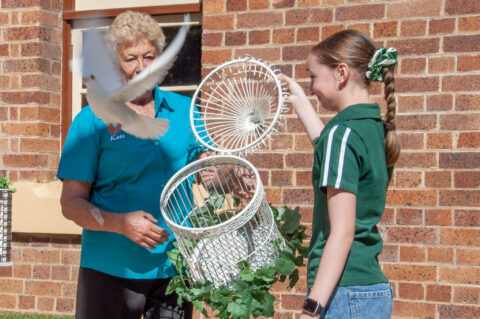
Young Sophie Schilt Releases the Final Peace Dove
Sophie is a Descendant of Pte John Lippiatt who
Fought at the Battle of Fromelles
(Picture Courtesy Simon Brooks RSL QLD)
Other Gallery Pictures:
–